
Case Study
Santa’s Magic Call: A Safe, Magical Human+AI Experience
Staff/Principal Product Designer & Experience Architect — Zero-to-one Human+AI Santa experience for kids, built in about a month with safety, story, and systems at the core.
Santa’s Magic Call is a real-time, voice-only Santa experience for kids, powered by AI and built to feel magical, safe, and human. It gives parents a way to create a warm Christmas moment without more screen time or creepy AI behavior— and it gives teams a concrete example of how a beloved character can live as a live, responsive system.
I took Santa’s Magic Call from idea to an end-to-end Human+AI prototype in about a month: defining the brand and promise, designing Santa’s persona and story arc, writing the safety rails that protect kids, and architecting the full system— landing page, Stripe checkout, Make automation, magic-link tokens, and a time-limited ElevenLabs voice agent—plus the story-driven go-to-market around it.
Beyond Santa, this is a proof of a reusable Human+AI pattern: translating human intent and mental models into reliable AI behavior through clear constraints (contracts), gating logic, and deterministic experience outcomes (arc, safety, redirects).
Experience Modeling decision loop
The biggest leverage wasn’t generating content—it was accelerating decisions. I interacted with parent and child personas and reviewed key moments through SME, psychology, and marketing lenses to stress-test tone, trust, and safety before scale. That loop compressed ambiguity into clarity and gave me the confidence to design and build the end-to-end experience in about a month.
Instead of waiting for traction data, I used persona + expert-lens pressure testing to make safer, faster product decisions under uncertainty.
At a Glance
Jump to: Challenge · Approach · Outcomes
Project Overview
- Client: Santa’s Magic Call (UX Agentic Prototype Lab)
- Role: Staff/Principal Product Designer & Experience Architect (founder-led, end-to-end ownership)
- Timeline: ~1 month from initial concept to live, purchasable experience
- Team: Solo founder/operator supported by AI agents, automations, and a small network of parent testers
Tools & Methods
- Voice AI: ElevenLabs real-time agent
- Orchestration: Make (webhooks, token management, session control)
- Commerce & Access: Stripe for purchase → entitlement → magic-link delivery
- Web: Lightweight HTML/JS call page & parent flows
- Design & Prototyping: Figma
- Creative & Visual: Adobe Creative Cloud (branding, visuals, motion)
- Video & Content: GenAI video tools (e.g., Veo) + DaVinci Resolve
- Methods: Experience Modeling, Human+AI interaction design, safety & ethics for kid-facing AI, story-driven experience architecture, behavioral psychology & neuroscience-informed design, parent feedback loops
Challenge
Most families know two versions of Santa: the rushed mall visit and the endless scroll of holiday content. Both are loud, overstimulating, and rarely built around what kids actually need—a calm, warm moment where they feel seen.
At the same time, many teams are under pressure to “do something with AI” but avoid kid-facing experiences because the stakes are high. One awkward response or unsafe topic can damage trust with parents and the brand.
- Warm, human, magical: Design a real-time, voice-only Santa experience that feels genuinely magical—not robotic, salesy, or gimmicky.
- Emotional safety: Keep children emotionally and psychologically safe in every interaction.
- Myth protection: Protect the Santa myth and family traditions without overexplaining how the magic works.
- Parent simplicity & trust: Make it simple and trustworthy enough that a busy parent will use it once and feel good about using it again.
- Lean operations: Run the service reliably with one human plus AI agents and automations during a short holiday window—no large support team.
The goal wasn’t a clever AI demo. It was to prove that a beloved character could live as a live Human+AI system that parents actually trust— with clear safety rails, simple access, and a story that feels good on the other side of the call. If it works for Santa, the pattern can extend to other characters, IP, and experiential brands.
Challenge Examples
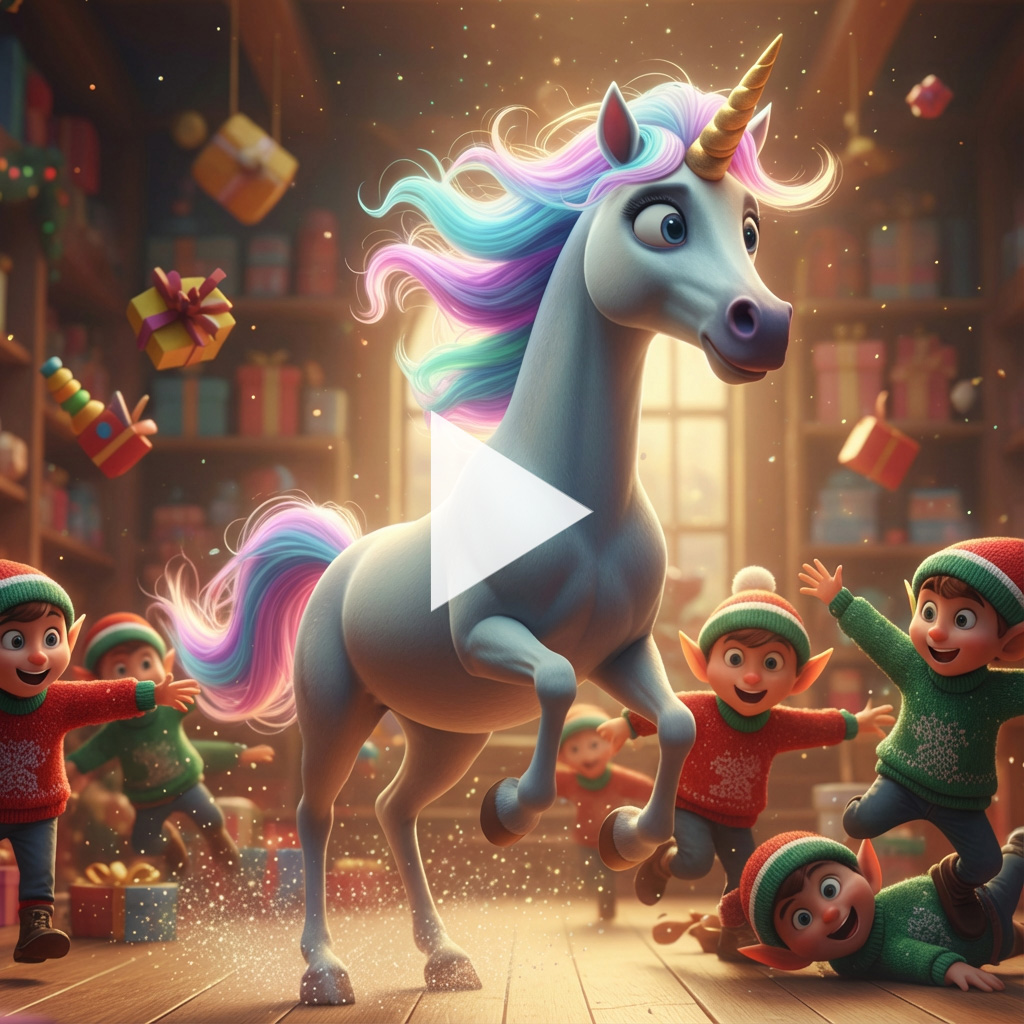
Holiday chaos everywhere—overloaded malls, flashing ads, kids pulled in every direction. This is the environment I was designing against.
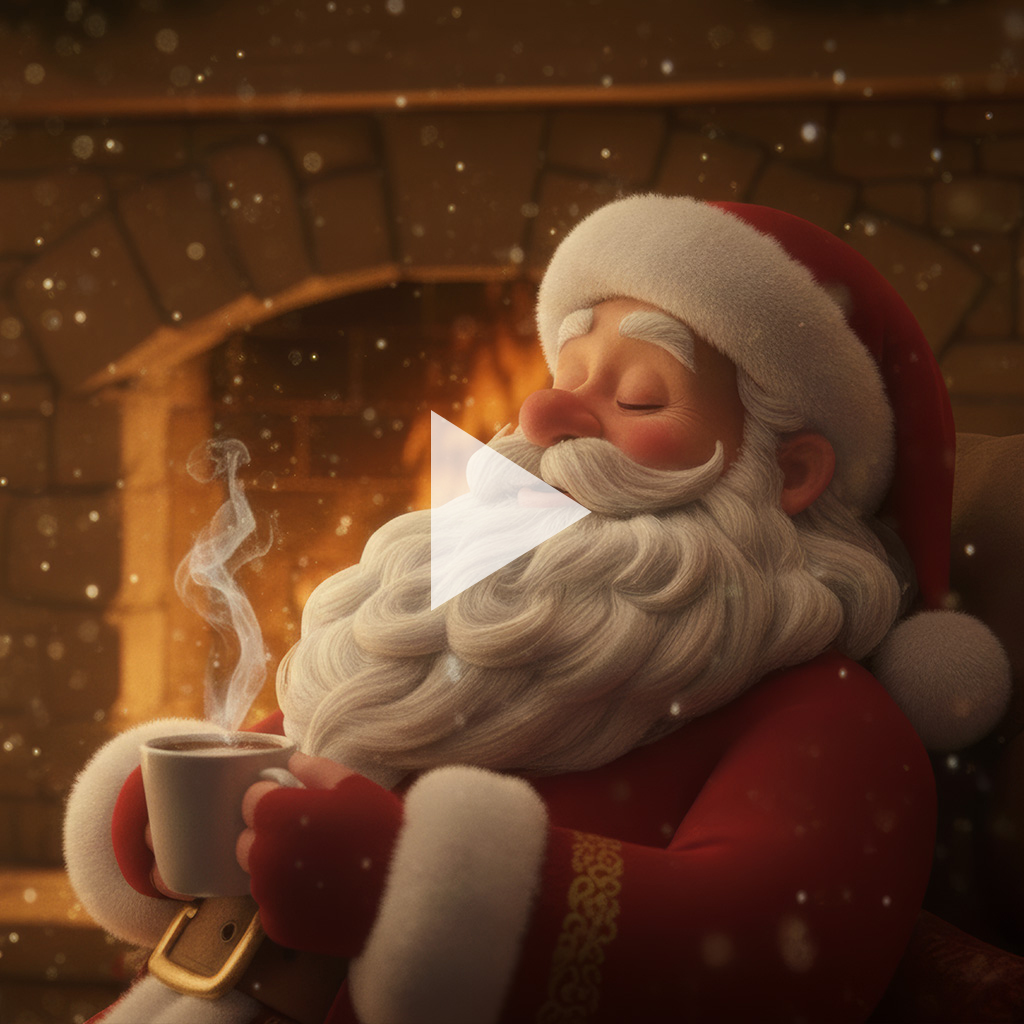
Santa as a calm, grounded character
Santa as a calm, grounded character: warm light, soft posture, and full attention on the child. This became the emotional north star for the AI agent.
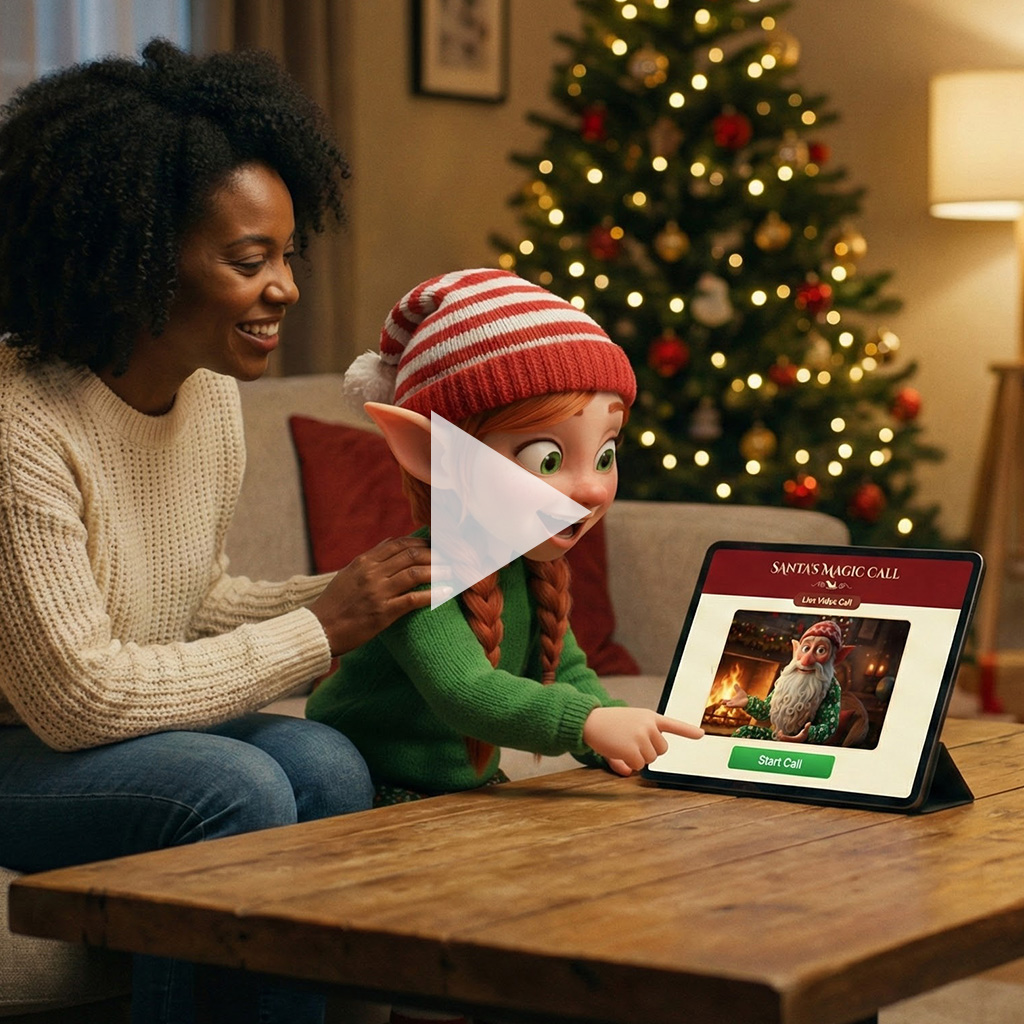
A parent and child at home in a simple, focused moment of connection. The entire system is built to protect this feeling.
Vision & Objectives
- Vision: Create a Santa experience that feels like it was designed by someone who understands both kids and AI—a cozy, real-time voice call where a child’s imagination, not their wishlist, powers the magic.
- Child experience: Deliver a five-minute call that feels personal, calm, and playful for shy, high-energy, and imaginative kids alike.
- Emotional focus: Center the interaction on the child’s “spark”—their kindness, creativity, and feelings—rather than on gifts or consumption.
- Safety & myth: Keep language and pacing gentle, preserve Santa’s warmth and myth, and never break character or expose the mechanics behind the magic.
- System pattern: Use Santa’s Magic Call as a flagship pattern for Human+AI experiences that can extend to other IP and experiential brands.
In short, the vision was to make Santa feel small and human on the outside—and to design a Human+AI system inside that families and brands can trust.
Approach
To keep this case skimmable, the deep details live in visuals and key artifacts below. At a high level, my approach was:
- Design Santa as a live character, not just a prompt: Emotional pillars, voice and tone, and myth rules (no naughty list, no breaking the magic) to keep Santa consistent and warm.
- Bake safety and ethics in from day one: Forbidden topics, redirect patterns, and soft landings for sensitive moments, guided by a synthesized Childhood Advisory Council.
- Architect the Human+AI system behind the magic: End-to-end flow (Stripe → Make → magic link → time-limited ElevenLabs call) so one human plus AI agents can run the experience reliably.
- Structure the call as emotional beats, not a script: A five-minute arc of greeting → Elf name → Snow Globe problem → wish → deeper feeling → identity-affirming close, tuned for different child types.
- Extend the same story into marketing: Hero video, Elf Orientation, and short-form concepts (Mallet Test, How to Hide a Pony, Snow Globe “hypnotist” clips, QR campaigns) as an outer ring of the same narrative.
- Use Experience Modeling to rehearse edge cases: Synthetic child/parent personas and advisory agents to tune language, spot risk, and adjust safety rails before live families use the system.
The result is a Human+AI experience where character, safety, system, and story are all designed as one.
Approach Examples
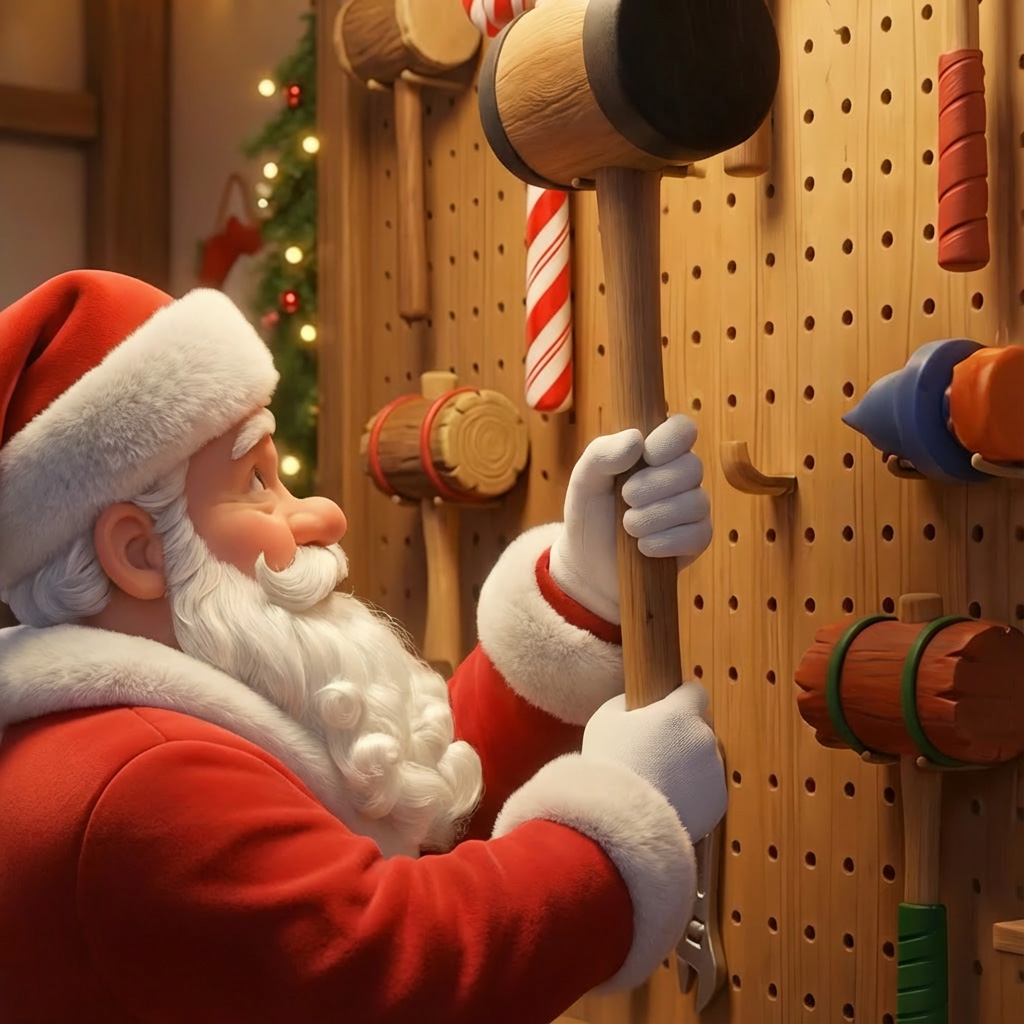
“Let’s see what belongs on the bench…” Picking which ideas, prompts, and flows are even worth stress-testing.
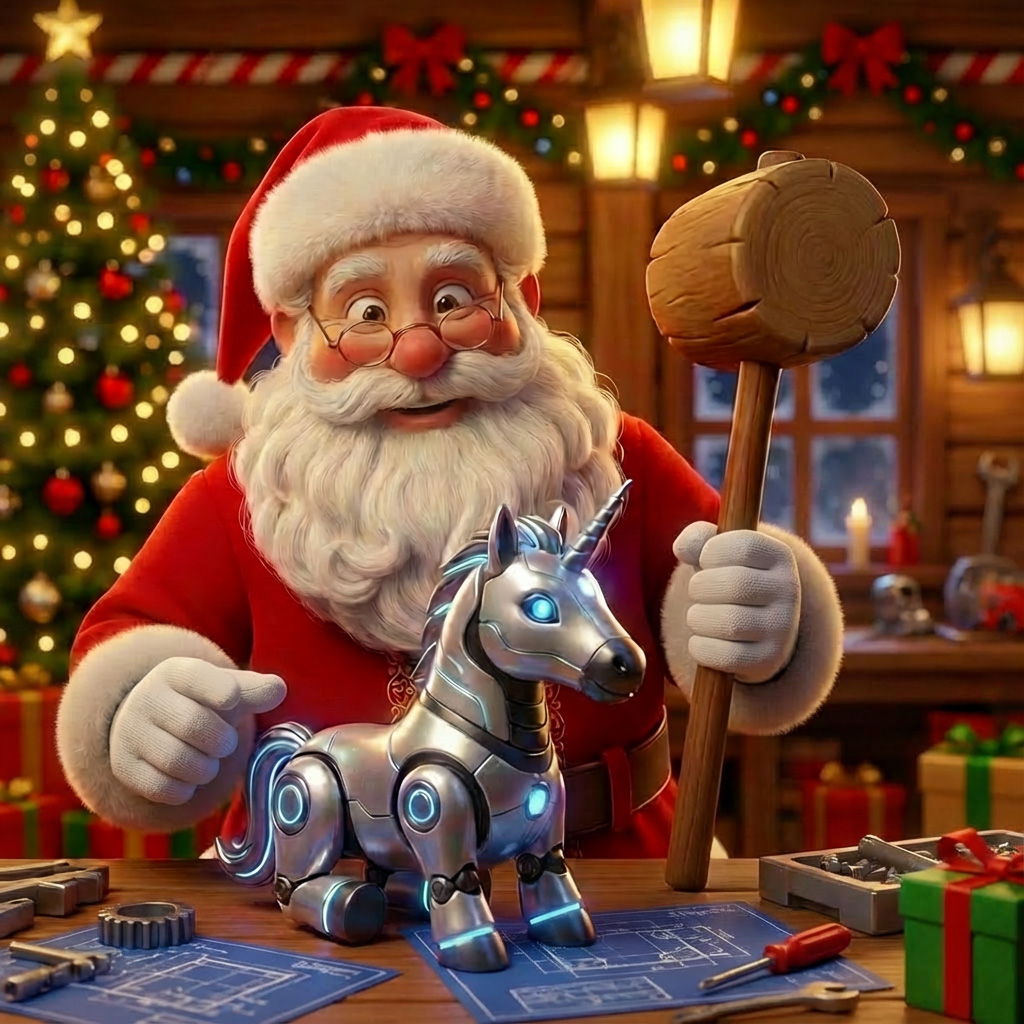
“Time for the Mallet Test.” This is where I push the idea against kids, parents, and safety rails in the model to see where it might crack.

“There goes another bad AI myth.” Wow that was satisfying.
Transformation
- For families: From rushed mall photos and generic videos to a calm, five-minute conversation where Santa listens, reflects feelings, and reminds kids that their kindness and imagination make the magic work.
- For the experience pattern: From “kid-facing AI is too risky” and concept-only demos to a working, reusable pattern for character-led Human+AI services with safety rails and a lean operating model.
- For my practice: From strong theory around Experience Modeling and Human+AI systems to a live flagship that proves those ideas under real pressure—and yields reusable agents, patterns, and narrative structures.
Santa’s Magic Call turned a fragile idea into a tested pattern for Human+AI experiences that can scale across characters and brands.
Outcomes
Evidence note: This was a pre-scale validation build—clarity came from persona + expert-lens pressure testing, not traction metrics.
Takeaways
This project put all of my ideas about Human+AI experiences under real pressure. I had to make hard tradeoffs, live inside the edge cases, and design for the moments that could quietly go wrong for a child or a parent.
Along the way I validated a lot of what I’ve been working toward—Experience Modeling, safety-first design, story and system evolving together—and I came out with something I’m proud of: a Santa experience that feels small and human on the outside, and carries a lot of thought and care on the inside.
If you’re exploring Human+AI experiences for your own products or IP and want to talk through what’s possible, you can get in touch here.
The only blocker at launch was starting the live call reliably via the voice API; the rest of the system and experience design were complete.